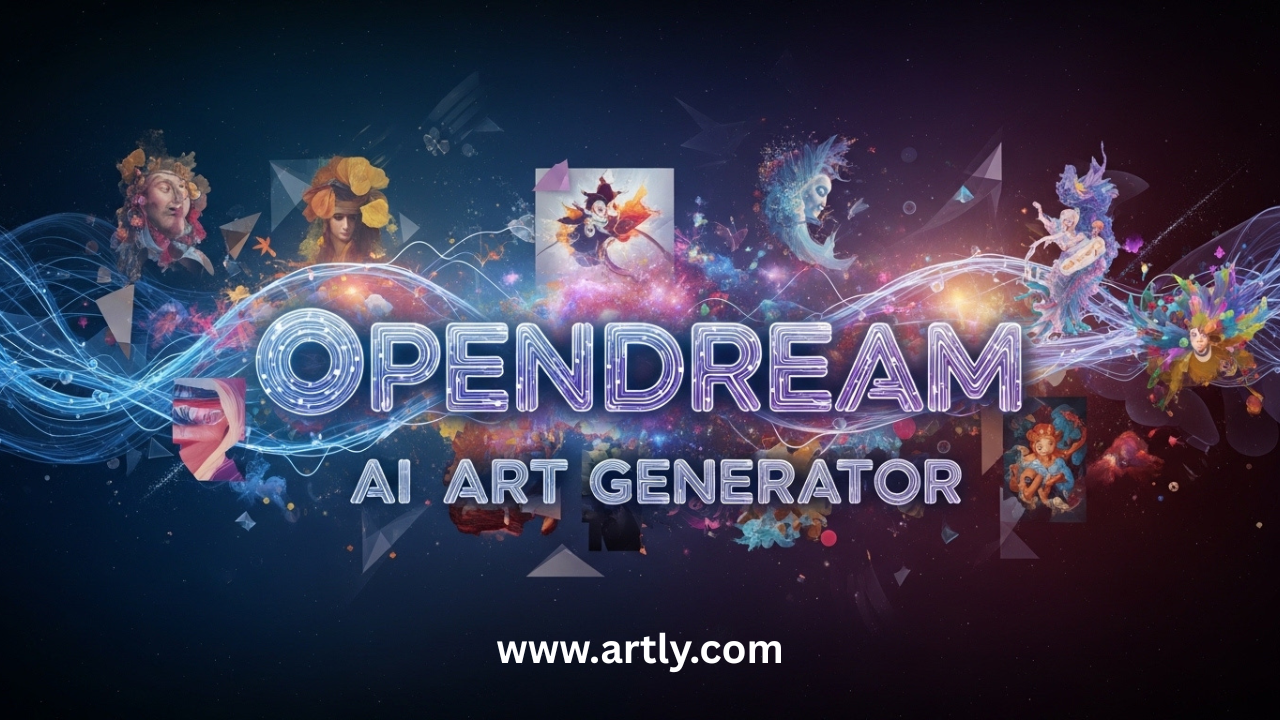
Imagine a world where creativity knows no bounds, where art can be generated at the click of a button. Welcome to the realm of Opendream Ai Art Generator—a revolutionary tool that merges technology and creativity in ways we’ve only dreamed about before. This innovative platform harnesses artificial intelligence to create stunning visual artworks, making it accessible for anyone with an idea.
Whether you’re an artist seeking inspiration or someone looking to explore new avenues of expression, Opendream opens doors to endless possibilities. With each creation tailored by AI algorithms, artists and enthusiasts alike are discovering how this technology can transform their vision into reality. Step into this exciting frontier where imagination meets innovation—let’s delve deeper into what makes Opendream so special!
How it works
Opendream Ai Art Generator operates by harnessing advanced algorithms to create stunning artworks. It starts with user input, which can be a simple text description or an uploaded image. This information serves as the foundation for generating unique pieces.
Once the data is received, machine learning models analyze it, drawing from vast datasets of existing art styles and techniques. These models identify patterns and elements in both classic and contemporary works.
The generator then synthesizes this knowledge to produce original images. Users are often amazed at how quickly their visions transform into vibrant visuals.
Customization options allow users to tweak colors, styles, or themes further, enhancing the creative process. The result is not just automated art; it’s an interactive journey that invites artistic expression through technology.
The Technology behind the Generator
Opendream Ai Art Generator relies on advanced machine learning algorithms. At its core, it utilizes neural networks that mimic the human brain’s functioning. This allows the generator to analyze and understand vast datasets of existing artwork.
The technology employs a technique known as deep learning. Through this method, it learns patterns, styles, and techniques from countless images. As a result, Opendream can produce original pieces that reflect various artistic movements.
Additionally, generative adversarial networks (GANs) play a crucial role in its operation. One network creates images while another evaluates them for quality and authenticity. This back-and-forth process ensures high-quality outputs.
Furthermore, user input enhances the creation process. Artists can guide the generator by providing prompts or desired themes. This interaction fosters collaboration between AI and human creativity.
Benefits of using Opendream Ai Art Generator
The Opendream Ai Art Generator opens doors to creativity like never before. Artists and hobbyists alike can produce stunning visual content in mere moments. This technology streamlines the creative process, allowing users to focus on their vision.
Accessibility is a key advantage. You don’t need extensive training or artistic skills to create breathtaking pieces. Just input your ideas, and watch them come to life.
Collaboration with AI enhances inspiration too. It prompts new concepts that might not have emerged otherwise. With every creation, users learn more about art techniques without traditional barriers.
Cost-effectiveness plays a role as well. Hiring professional artists for projects can be expensive; this generator offers an affordable alternative for individuals or small businesses looking for high-quality visuals.
The ability to generate multiple variations of artwork helps refine ideas quickly, ensuring you find the perfect fit for any project or occasion.
Real-life Examples and Success Stories
Artists around the globe have embraced Opendream Ai Art Generator, transforming their creative processes. One notable example is a digital illustrator who used the tool to experiment with new styles. The results were stunning, leading to a viral series of artwork that gained significant attention on social media.
Another success story comes from an art educator who integrated the generator into her curriculum. Her students created unique pieces that combined traditional techniques with AI-generated elements. This innovative approach sparked discussions about creativity and technology in the classroom.
A graphic designer also found great value in using Opendream for client projects. By generating multiple concepts quickly, he was able to present diverse ideas that impressed his clients and accelerated project timelines. These real-life applications showcase how Opendream is revolutionizing artistic expression across various fields.
Limitations and Criticisms
While Opendream Ai Art Generator has made waves in the creative landscape, it is not without its shortcomings. One major criticism revolves around originality. Many argue that AI-generated art lacks the true essence of human creativity and emotion.
Another concern centers on accessibility. Although it’s designed to be user-friendly, some artists find it challenging to navigate effectively. This can lead to frustration rather than inspiration.
Quality control also raises eyebrows. The generator sometimes produces inconsistent results, leaving users disappointed with outputs that don’t meet their expectations.
Moreover, ethical questions loom large over AI art creation. Issues regarding copyright and ownership arise when works are generated using existing styles or influences from living artists.
These limitations highlight a complex relationship between technology and traditional artistry, prompting ongoing debate within the artistic community about what defines true creativity.
Future Developments and Potential Impact on the Art Industry
As technology advances, Opendream Ai Art Generator is expected to evolve. Future updates may introduce more sophisticated algorithms, enhancing creativity and detail in generated artworks. This could lead to a new wave of artistic expression.
Artists might find themselves collaborating with AI in unprecedented ways. The synergy between human intuition and machine learning could uncover fresh techniques and styles previously unimagined.
The commercial impact also looms large. With affordable art generation options, businesses could use AI-generated pieces for branding or marketing at lower costs.
Additionally, the democratization of art creation would allow more individuals to explore their creative potential without traditional barriers like formal training or expensive materials.
However, ethical considerations arise as well—questions about originality and ownership will need addressing as AI becomes a staple in creative processes within the industry.
Conclusion
The Opendream Ai Art Generator is more than just a tool; it’s a glimpse into the future of creativity. With its advanced algorithms and user-friendly interface, artists can explore new dimensions in their work. The technology behind it harnesses machine learning and neural networks to create stunning visuals that resonate with audiences.
Many benefits come from using this generator. Artists can save time, inspire fresh ideas, and enhance their creative processes. Real-life examples showcase how individuals have successfully incorporated AI-generated art into exhibitions or personal projects, pushing boundaries previously thought impossible.
That said, there are limitations worth noting. Critics argue about the authenticity of AI art versus traditional methods. Concerns about copyright and originality persist as technology evolves rapidly.
Looking ahead, developments in AI will undoubtedly shape the art industry significantly. As tools like Opendream grow more sophisticated, they may redefine what it means to be an artist today.
With all these factors at play, it’s clear that the intersection of art and artificial intelligence offers exciting opportunities while raising important questions for creators worldwide.