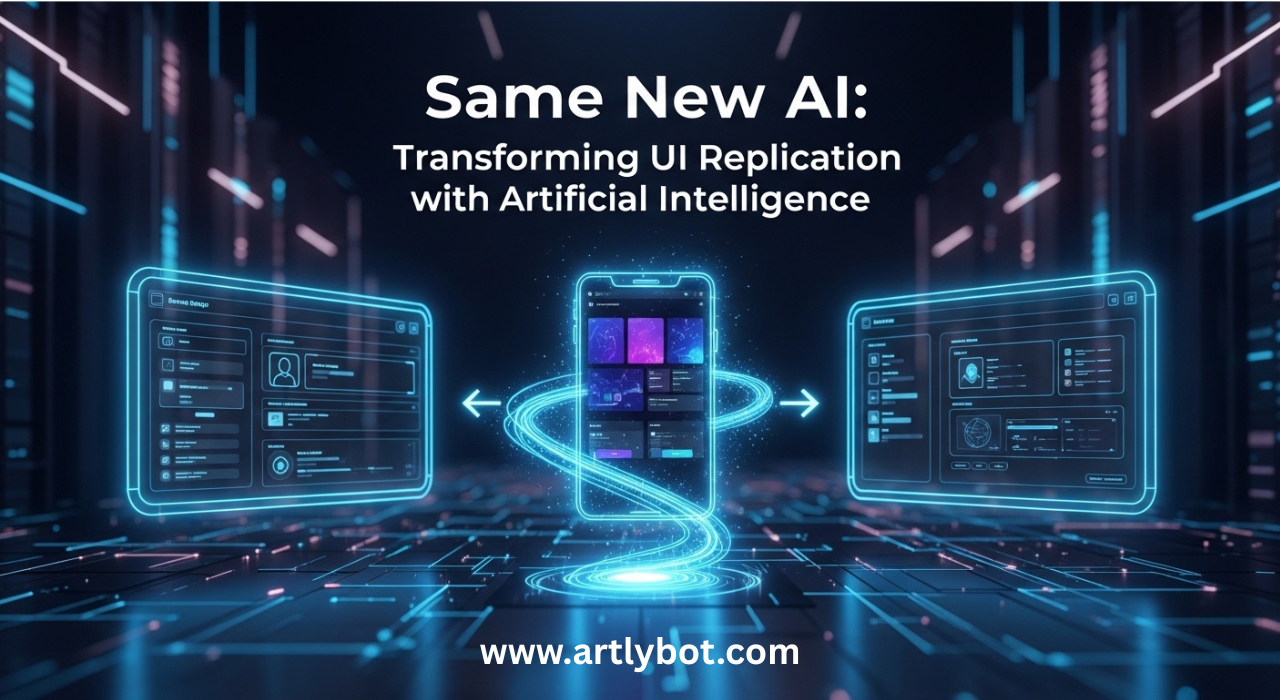
Artificial Intelligence (AI) continues to revolutionize various aspects of technology, and one of the most exciting developments is the emergence of Same New AI. This innovative tool is transforming the way we approach UI replication, making it easier and more efficient to create identical copies of user interfaces. In this article, we’ll explore the capabilities of Same New AI, its benefits, and how it’s changing the landscape of UI replication.
Introduction to Same New AI
Same New AI is an AI-driven platform that enables users to replicate user interfaces (UIs) with unprecedented ease and accuracy. By leveraging the power of AI, Same New AI allows developers, designers, and businesses to create identical copies of existing UIs, streamlining the development process and reducing the time and resources required to build new applications.
What is UI Replication
UI replication refers to the process of creating an identical copy of a user interface, including its layout, design, and functionality. This can be a complex and time-consuming task, requiring significant expertise and resources. However, with the advent of Same New AI, UI replication has become more accessible and efficient.
The Challenges of UI Replication
Traditionally, UI replication has been a manual process, requiring developers to painstakingly recreate the UI, element by element. This can be a tedious and error-prone process, prone to inconsistencies and inaccuracies. Moreover, it can be difficult to replicate complex UI components, such as dynamic menus, animations, and interactions.
How Same New AI Works
Same New AI uses a combination of machine learning algorithms and computer vision to analyze and replicate UIs. The process begins with the user providing a URL or a screenshot of the UI they want to replicate. The AI then analyzes the UI, identifying its various components, such as buttons, forms, and menus.
The AI uses this information to generate a functional replica of the UI, complete with its original layout, design, and functionality. The resulting replica can be used as a starting point for new development projects, or as a means of testing and validating UI designs.
Key Features of Same New AI
Same New AI offers a range of features that make it an attractive solution for UI replication. Some of its key features include:
- Accurate UI replication: the platform can replicate UIs with high accuracy, including complex components and interactions.
- Fast and efficient: The AI can generate replicas quickly, reducing the time and resources required for UI replication.
- Customizable: Users can customize the replica to suit their needs, including modifying the layout, design, and functionality.
- Integration with development tools: it can be integrated with popular development tools, such as React and Next.js, making it easy to incorporate the replicated UI into new projects.
Benefits of Using this solution
The benefits of using the system are numerous. Some of the most significant advantages include:
- Reduced development time: By replicating existing UIs, developers can save time and resources, accelerating the development process.
- Improved accuracy: our approach can replicate UIs with high accuracy, reducing the risk of errors and inconsistencies.
- Increased productivity: By automating the UI replication process, developers can focus on higher-level tasks, such as designing and implementing new features.
- Enhanced collaboration: it can facilitate collaboration between designers, developers, and stakeholders, ensuring that everyone is on the same page.
Use Cases for the system
the program has a range of potential use cases, including:
- Prototyping and testing: the program can be used to create prototypes and test UIs, allowing developers to validate their designs and identify areas for improvement.
- Development and deployment: The AI can be used to replicate UIs for new development projects, accelerating the development process and reducing the risk of errors.
- Design and research: it can be used to analyze and understand existing UIs, providing insights into design patterns and trends.
Comparison with Other AI Tools
this initiative is not the only AI tool available for UI replication. Other tools, such as Lovable.dev, offer similar capabilities. However, the program has several advantages, including its high accuracy, fast processing times, and customizable output.
Technical Requirements and Limitations
our approach is a cloud-based platform, accessible via a web interface or API. The technical requirements for using the platform are minimal, with users requiring only a modern web browser and an internet connection.
However, there are some limitations to using the program. For example, the AI may struggle to replicate highly complex or dynamic UIs, and users may need to customize the output to suit their specific needs.
Future Developments and Roadmap
The developers of it are continually working to improve and expand the platform. Some of the planned developments include:
- Improved accuracy and speed: The developers are working to improve the accuracy and speed of the AI, allowing for even faster and more accurate UI replication.
- New features and integrations: The platform is expected to gain new features and integrations, including support for additional development tools and frameworks.
- Enhanced customization options: Users can expect to see more customization options, allowing them to tailor the output to their specific needs.
Getting Started with our approach
Getting started with the platform is relatively straightforward. Users can sign up for an account on the this solution website, and begin using the platform immediately.
The platform offers a range of resources and support, including documentation, tutorials, and customer support.
Success Stories and Case Studies
our approach has already been used by a range of organizations, from startups to enterprises. Some of the success stories and case studies include:
- Accelerated development: One company reported a 50% reduction in development time, thanks to the use of the platform.
- Improved accuracy: Another company reported a significant reduction in errors, thanks to the high accuracy of the AI-generated replicas.
Conclusion and Future Outlook
The platform is a powerful tool that is transforming the way we approach UI replication. With its high accuracy, fast processing times, and customizable output, it’s an attractive solution for developers, designers, and businesses.
As the platform continues to evolve and improve, we can expect to see even more exciting developments in the field of UI replication. Whether you’re a developer, designer, or business owner, it is definitely worth exploring.
By using this solution, you can unlock new possibilities for UI replication, accelerating your development process, improving accuracy, and enhancing collaboration. With its potential to revolutionize the way we build and design user interfaces, the system is an exciting development that’s worth watching.
As we continue to explore the capabilities of this initiative, we can expect to see new and innovative applications emerge. From prototyping and testing to development and deployment, the platform is poised to make a significant impact on the world of UI replication.