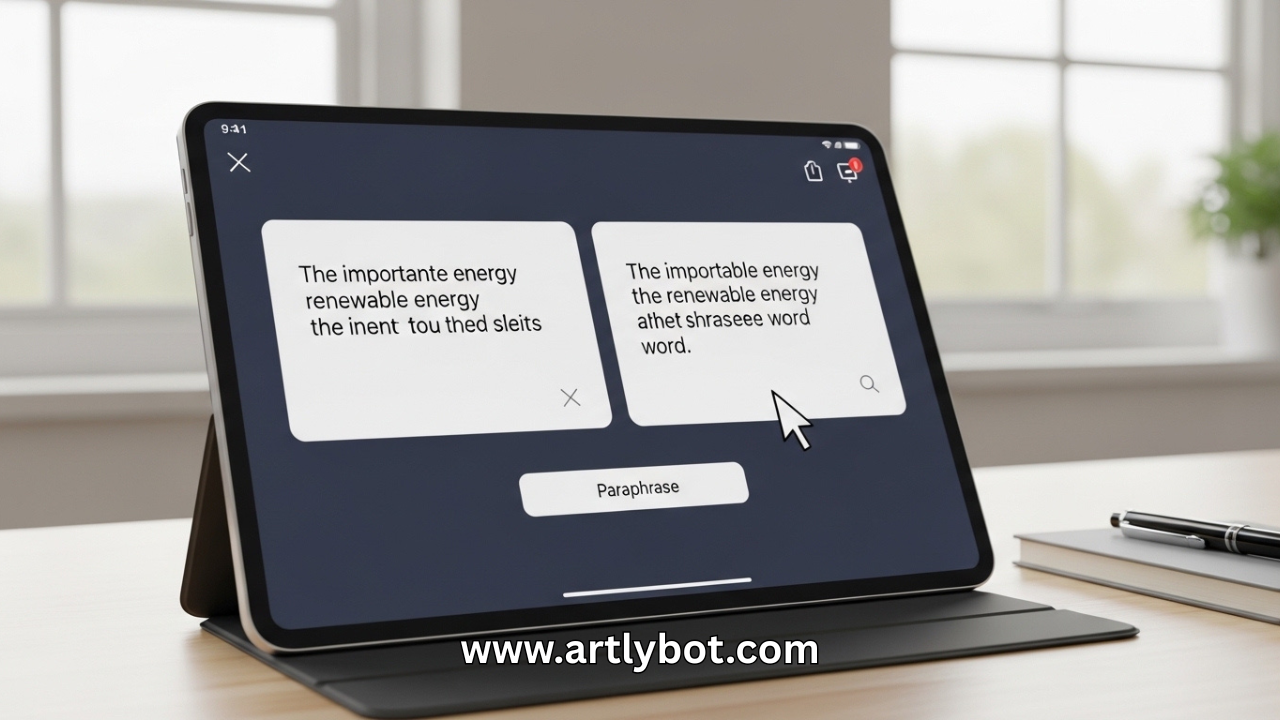
A paraphrasing tool is one of the most useful writing aids for students, bloggers, researchers, and professionals who want to improve their content without changing its original meaning. In today’s digital world, where originality, clarity, and speed matter, paraphrasing tools have become essential for producing high-quality text efficiently. This article explains exactly what a paraphrasing tool does, how it works, and why users actively search for it on Google.
What Is a Paraphrasing Tool?
A paraphrasing tool is an online or software-based application that rewrites existing text using different words, sentence structures, or phrasing while preserving the original meaning. Instead of copying content word-for-word, the tool transforms it into a new version that sounds natural and unique.
The main goal of a paraphrasing tool is not just rewriting, but improving readability, avoiding plagiarism, and saving time. Whether you are rewriting an article, simplifying complex sentences, or generating fresh content ideas, a paraphrasing tool helps achieve these tasks quickly and accurately.
What Does a Paraphrasing Tool Actually Do?
At its core, This tool analyzes the input text and performs several actions:
-
Replaces words with suitable synonyms while keeping context intact
-
Restructures sentences to improve flow and clarity
-
Adjusts tone and style depending on the selected mode (formal, simple, creative, or academic)
-
Preserves the original meaning so the message stays accurate
Advanced paraphrasing tools use artificial intelligence and natural language processing (NLP) to understand context rather than blindly swapping words. This results in content that feels human-written instead of robotic.
Why Do Users Need a Paraphrasing Tool?
Users search for this tool because it solves multiple writing problems at once. Here are the most common reasons people rely on it:
-
Avoid Plagiarism
These tools helps rewrite content in a unique way, reducing similarity with the original source. This is especially important for academic writing and SEO content. -
Improve Writing Quality
If the original text is awkward or unclear, paraphrasing tools can make sentences smoother, clearer, and more professional. -
Save Time and Effort
Rewriting content manually takes time. A paraphrasing tool can generate improved versions in seconds. -
Simplify Complex Text
Many tools offer a “simple” mode that makes difficult content easier to understand for a wider audience. -
Create Fresh Content for SEO
Content creators use these tools to refresh existing articles, avoid duplication, and rank better on search engines.
Who Can Use a Paraphrasing Tool?
A paraphrasing tool is useful for a wide range of users, including:
-
Students rewriting assignments or research notes
-
Bloggers and content writers creating unique articles
-
Digital marketers optimizing SEO content
-
Researchers summarizing or rewording studies
-
Business professionals refining emails and reports
No advanced writing skills are required, which makes paraphrasing tools accessible to everyone.
Is Using a Paraphrasing Tool Ethical?
Yes, using a paraphrasing tool is ethical when done correctly. It should be used to improve clarity and originality, not to misrepresent someone else’s work as your own. For academic or professional use, it’s still important to cite original sources when required.